
Multi-stop chauffeur itinerary in San Diego planning is not only about reserving a vehicle. It is about building a day that actually works once traffic, hotel entrances, meeting times, dinner reservations, shopping bags, passenger preferences, and last-minute changes are all part of the schedule. A simple point-to-point ride may be enough for one airport pickup or one dinner transfer, but a full day with several stops needs a better plan.
A visitor might start at a La Jolla hotel, stop for a meeting in Downtown San Diego, continue to lunch in Little Italy, visit a client in UTC, and finish with dinner near the waterfront. A family might need a morning appointment, a shopping stop, a scenic break, and a return to the resort. An executive assistant might be coordinating the day for a principal who should not have to think about parking, ride requests, or where the next vehicle is coming from.
This guide explains how to plan the itinerary before the day begins. It covers what details to collect, how to organize stop order, where to leave buffer time, when hourly chauffeur service makes more sense than separate rides, what affects cost, and how to choose between sedan, SUV, and Sprinter-style vehicles. The goal is a smoother San Diego day, not a rushed schedule that looks good on paper but falls apart after the second stop.
A good multi-stop chauffeur itinerary in San Diego starts with the passenger list, pickup address, stop sequence, fixed appointment times, flexible stops, luggage or shopping items, vehicle type, and a backup contact. The more stops you have, the more important it is to plan realistic timing between locations instead of assuming the day will move exactly like a map estimate. If the day requires continuity, a dedicated private chauffeur service can keep the transportation piece organized while the traveler focuses on meetings, guests, dining, or personal plans.
Planning Detail | Why It Matters |
Pickup location | Prevents confusion at hotels, offices, homes, resorts, and valet entrances. |
Stop sequence | Keeps the day efficient and prevents unnecessary backtracking across San Diego. |
Timing windows | Protects fixed meetings, dinner reservations, appointments, and event arrivals. |
Passenger count | Helps choose the right sedan, SUV, or Sprinter-style vehicle. |
Luggage or shopping bags | Affects vehicle space and whether items can stay with the group. |
Event or dinner reservations | Shows which stops cannot move if traffic or meetings run late. |
Backup contact | Keeps communication clear if the passenger is unavailable or the schedule changes. |
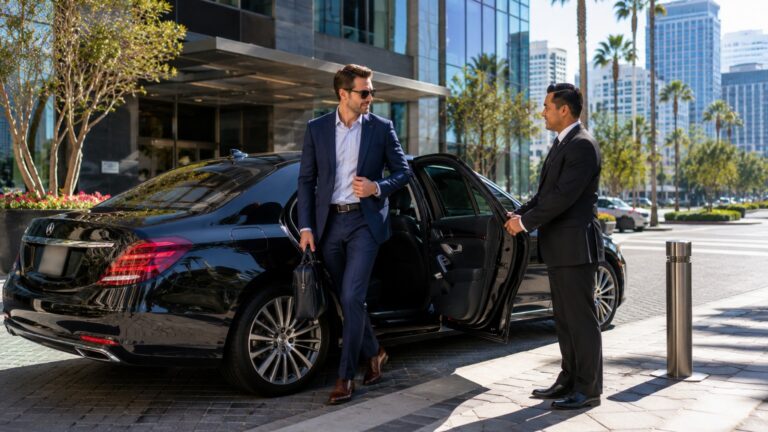
A multi-stop chauffeur itinerary is a planned transportation schedule with more than one pickup or drop-off. It may include a hotel pickup, two meetings, a lunch reservation, an appointment, shopping, an event arrival, and a final return to a residence or hotel. The value is not simply that a car arrives. The value is that the day is organized around the passenger, the locations, and the timing expectations.
This is different from a simple one-way ride. With a one-way ride, the transportation provider handles one movement from Point A to Point B. With a multi-stop itinerary, the route and timing can change throughout the day. The passenger may stay at one stop for ten minutes and another for two hours. A meeting may run late. A dinner may start earlier than expected. A hotel valet may take extra time. The itinerary needs enough structure to stay organized and enough flexibility to absorb normal changes.
A strong chauffeur itinerary also makes communication easier. Instead of sending several ride requests or explaining the schedule repeatedly, the booker provides one clear plan: where the day starts, where it ends, which stops are fixed, which stops are flexible, and who should approve changes. That structure matters for executives, visiting clients, families, event guests, and travelers who want the day to feel polished rather than improvised.
A multi-stop itinerary is useful when the day has more moving parts than a single transfer can handle. It is especially helpful when the passenger does not want to manage parking, repeated app-based ride requests, unfamiliar addresses, or changing pickup points throughout the day. The more time-sensitive or guest-facing the day becomes, the more valuable it is to plan the transportation as one itinerary.
Business travelers often need transportation that supports timing and presentation. A schedule may include a hotel pickup, a Downtown meeting, a lunch with clients, a visit to UTC or Sorrento Valley, and an evening dinner. In that situation, transportation is part of the business day. It should reduce friction, not create another task. Companies coordinating several visitors, executives, or partners can also connect this planning with corporate transportation when the itinerary involves teams, roadshows, recurring meetings, or client-facing arrivals.
For business use, collect exact building addresses, suite or lobby instructions, security desk details, parking or loading-zone notes, and the assistant or host contact. A meeting may be listed as “Downtown,” but the actual pickup may need to happen at a side entrance, hotel valet, convention center loading area, or office tower lobby. Those details matter when the next stop is fixed and the traveler is on a schedule.
For convention-area schedules, review the San Diego Convention Center calendar before setting meeting-day pickup windows, especially when a conference, trade show, or evening event may affect Downtown traffic and loading zones.

Corporate retreats and team days create a different challenge: group coordination. If six people are leaving a resort for a meeting, lunch, activity, and dinner, splitting into several cars can create delays and uneven arrivals. One person may leave luggage in the wrong vehicle, one car may arrive at a different entrance, and the group may lose time regrouping at each stop.
For retreats, the itinerary should identify the group lead, total headcount, whether everyone moves together, whether a Sprinter-style vehicle is needed, and how much flexibility is required between stops. If the day includes a team activity followed by dinner, build enough time for people to gather, load belongings, and arrive without rushing.
Choosing between a luxury SUV and a Mercedes Sprinter often depends on passenger count, luggage, and how long the group will stay together throughout the day. The Sprinter Vans vs SUVs comparison explains which option works best for different types of itineraries
Dinner and event itineraries often look simple but require careful timing. A group may need pickup from a hotel, arrival at a restaurant, standby during dinner, transfer to a concert or gala, and late-night return. Parking, alcohol, event traffic, and post-event pickup conditions can make separate rides less predictable.
If an event has a strict start time, treat it as a fixed stop. If dinner may run long, decide in advance whether the chauffeur should wait, return at a set time, or stay available under an hourly booking. Late-night plans benefit from simple instructions because passengers are usually tired and do not want to solve transportation after the event ends.
Shopping and personal errand days are a strong fit for a multi-stop chauffeur itinerary because the route is flexible and items accumulate during the day. A visitor might start at a hotel, stop in La Jolla, continue to Fashion Valley or UTC, have lunch, make a few personal appointments, and return with bags or packages. The value is not only transportation between stores; it is having a vehicle that can support the whole day without carrying everything from stop to stop.
A day that includes shopping at Fashion Valley, lunch in La Jolla, and an evening return to a five-star resort is common for guests staying at several luxury hotels with chauffeur service in San Diego, where a dedicated vehicle remains available throughout the itinerary.
For shopping days, tell the provider whether bags, garment bags, gifts, or larger purchases are expected. A sedan may be comfortable for two people, but an SUV may be more practical if the day includes shopping bags, event attire, or luggage already in the vehicle.
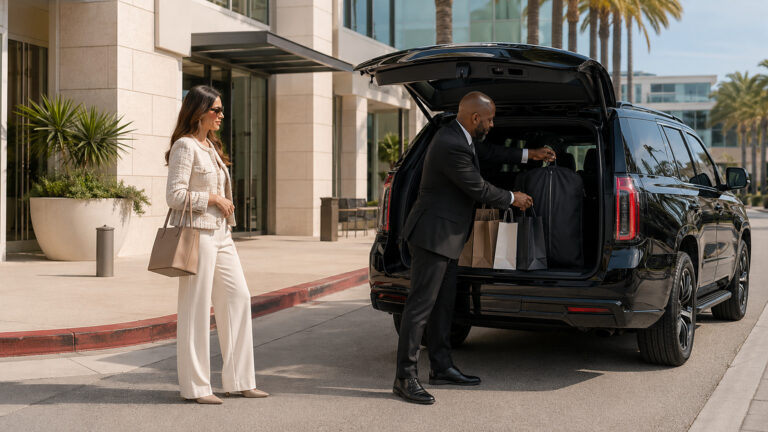
The most common mistake in a multi-stop day is arranging stops in the order they come to mind instead of the order that protects the schedule. San Diego is easy to enjoy, but it is still a spread-out city. A day that moves from La Jolla to Downtown to Del Mar to Coronado may be possible, but it needs a realistic route and clear priorities. Start by separating fixed-time stops from flexible stops.
Fixed-time stops are the parts of the day that cannot easily move. These include meetings, medical appointments, lunch reservations, dinner reservations, event doors, airport departures, and scheduled check-in times. Put these on the itinerary first. Then build travel time and buffer around them.
For example, if a traveler has a 10:00 a.m. meeting in Downtown San Diego and a 12:30 p.m. lunch in Little Italy, those times should anchor the morning. A shopping stop, coffee stop, or scenic stop can happen only if the fixed times allow it. This prevents the day from becoming too ambitious.
Flexible stops are useful, but they should not threaten the day. A coffee break, quick shopping stop, photo stop, hotel return, or personal errand can be placed around the fixed points. If the schedule runs late, these are the stops that can be shortened, moved, or removed without affecting the main purpose of the day.
This is especially important for travelers who want to do “a little of everything” in one day. A chauffeur itinerary can make the day smoother, but it cannot remove every time constraint. Decide which stops are essential and which are optional before the day starts.
A chauffeur itinerary should not be planned minute by minute. Add buffer for hotel valet, elevators, walking from a building entrance, luggage loading, traffic, parking-lane access, and passengers running a few minutes late. For simple hotel or office pickups, a 10- to 15-minute loading buffer can help. For groups, luggage, event attire, or resort properties, add more time.
Buffer time is not wasted time. It is what keeps the day from feeling rushed. If the schedule is too tight, every small delay becomes a problem. If the schedule has room built in, the chauffeur can keep the day moving while the passenger stays focused on the reason for the trip.
Some San Diego areas need more planning because of geography, traffic patterns, parking access, bridges, event crowds, or resort layouts. Downtown, Little Italy, Gaslamp, the waterfront, and the convention center can be close together, but curbside activity and event timing can still affect pickup. La Jolla and Del Mar are beautiful coastal areas, but they require more route planning than a quick downtown transfer. Coronado can be smooth when timed well, but bridge conditions and event traffic can matter. North County and Rancho Santa Fe can add distance and longer drive times.
For a multi-stop day, avoid assuming all San Diego stops are interchangeable. A morning meeting in UTC, lunch in La Jolla, and dinner in Downtown may work well. A route that jumps repeatedly between coastal and central areas may need more time. The itinerary should group nearby stops when possible and keep the most important appointments protected.
Hotel and resort properties also deserve attention. Large resorts may have multiple entrances, security gates, valet zones, and long internal drives. If the traveler is staying at a resort, provide the exact pickup point and confirm whether the chauffeur should meet at the lobby, main entrance, residence gate, or valet lane. This avoids wasting time before the first stop even begins.
For broader neighborhood context, the San Diego Tourism Authority’s Downtown San Diego guide can help visitors understand why Downtown, Gaslamp, Little Italy, the waterfront, and nearby districts often work as common bases for multi-stop days.

A multi-stop day does not always require an all-day reservation. Sometimes separate rides are enough. But once the day has several stops, uncertain timing, luggage, shopping bags, or a passenger who values continuity, an hourly booking may be the cleaner option. Richline’s hourly black car service San Diego page is the natural service reference when the schedule needs a reserved vehicle for a flexible block of time.
Separate point-to-point rides may work when the plan is simple: hotel to dinner, dinner back to hotel, or one meeting followed by a return. They become less reliable when the passenger needs to move through several stops, keep items in the vehicle, adjust timing, or avoid repeating instructions all day.
Hourly or private chauffeur planning makes more sense when the day includes more than two or three stops, the end time is uncertain, meetings may run long, dinner or event pickup is needed later, the passenger wants the same vehicle and chauffeur, or bags need to stay with the vehicle between stops. The decision is not only about luxury. It is about reducing the number of transportation decisions during a day that already has enough moving parts.
The best itinerary is only as good as the information provided before booking. A vague request like “I need a chauffeur for the day in San Diego” forces the provider to guess. A better request gives enough detail to choose the right vehicle, estimate timing, identify the right pickup points, and understand where flexibility is needed.
Before booking, send the pickup address, pickup time, passenger name, number of passengers, full stop list, preferred order of stops, fixed appointment times, flexible stops, luggage or shopping items, vehicle preference, billing contact, and backup phone number. If the schedule is still being finalized, identify what is confirmed and what may change.
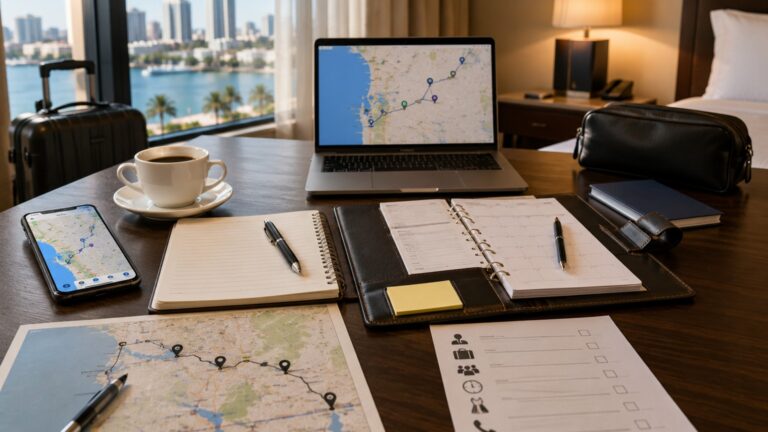
For business travelers, include meeting addresses, building names, suite numbers, security desk requirements, host names, client names, and assistant contacts. If the passenger is going directly from a meeting to a dinner, note whether they will have a laptop bag, garment bag, or presentation materials. If the traveler prefers quiet time between meetings, note that as well. The chauffeur does not need every business detail, but the transportation plan should support the day’s rhythm.
For hotel and resort guests, include the hotel name, main entrance or valet location, room or lobby pickup preference if relevant, luggage count, and dinner or event timing. Some properties have multiple entrances or private residences attached to the resort. If the traveler should be met at a residence gate or side entrance, write that clearly in the itinerary.
For groups, include headcount, whether everyone travels together, how many bags or personal items are involved, whether anyone joins later, and whether the day requires an SUV or Sprinter. Group itineraries should also name one decision-maker. Without that, simple changes can become confusing because multiple passengers may give different instructions.
Before booking, send the pickup address, pickup time, passenger name, number of passengers, full stop list, preferred order of stops, fixed appointment times, flexible stops, luggage or shopping items, vehicle preference, billing contact, and backup phone number. If the schedule is still being finalized, identify what is confirmed and what may change.
Searchers often want to know what a multi stop chauffeur itinerary San Diego cost may depend on. Exact pricing should be confirmed directly, because the total can change based on the day. But the factors are predictable: number of hours, vehicle type, distance between stops, wait time, number of passengers, luggage, shopping bags, event timing, airport pickup or drop-off, and whether additional stops are added during the day.
The most important factor is usually time. A four-hour itinerary and a full-day itinerary are different commitments. Vehicle type also matters. A sedan may be appropriate for one executive, while an SUV or Sprinter may be needed for a family, group, event guests, or shopping day. Distance matters too: several stops in Downtown and Little Italy are different from a day that moves between La Jolla, Del Mar, Coronado, and Rancho Santa Fe.
Cost planning should not be treated as only a price comparison. If a larger vehicle prevents a luggage problem, or if hourly service prevents several waiting periods and repeated ride requests, the better choice may be the option that fits the day rather than the smallest option available. Ask what is included, how schedule changes are handled, and whether the itinerary allows enough time for the stops listed.
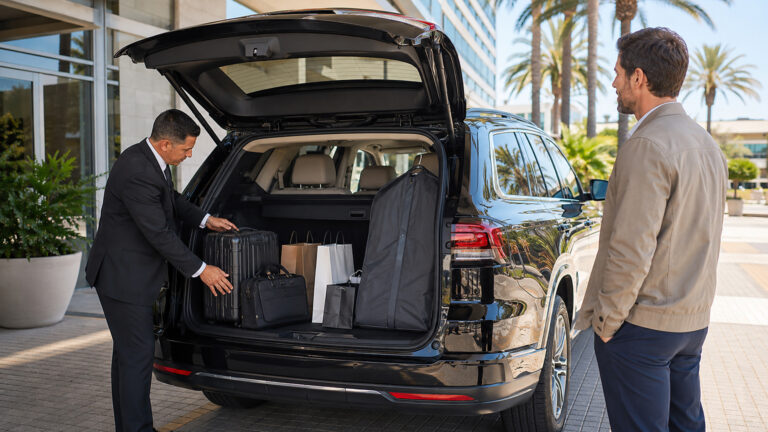
Because a multi-stop day can begin or end at SAN, Richline’s airport car service in San Diego can be planned as part of the itinerary when a flight is connected to meetings, hotel stops, dinner plans, or event transportation.
A sedan is usually best for one or two passengers with light items. It works well for an executive meeting day, a dinner reservation, a hotel pickup, or a simple schedule with minimal bags. It offers a polished arrival without unnecessary vehicle size. The limit is cargo space. If the day includes shopping, luggage, event materials, or more passengers, a sedan may not be enough.
An SUV is often the safest middle choice for multi-stop days. It adds comfort, space, and flexibility without moving to a full group vehicle. It can be helpful for families, hotel guests with luggage, high-end shopping trips, travelers with event attire, or small groups who want more room during a longer day. If luggage count is uncertain, an SUV can prevent a space issue later.
A Sprinter-style vehicle is best when keeping people together matters. Corporate retreats, wedding guests, small teams, client groups, and families traveling together may benefit from one larger vehicle instead of several smaller ones. The value is coordination. The group arrives together, luggage stays together, and the schedule is easier to manage.
Sample itineraries help turn a general concept into a real plan. The examples below are not fixed packages. They show how different travelers can organize a day so the transportation supports the itinerary rather than interrupting it.

Hotel pickup in the morning, meeting in Downtown San Diego, lunch in Little Italy, second meeting in UTC or La Jolla, hotel return to refresh, then dinner near the waterfront. This itinerary needs fixed times for the meetings and dinner, plus flexible buffer around lunch and the hotel return. It is a strong use case for a traveler who wants continuity between business commitments.
Resort pickup in La Jolla or Del Mar, shopping or personal appointment, waterfront stop, dinner reservation, and late-night return to the hotel. This works best when dinner is treated as the fixed stop and the earlier activities remain flexible. If shopping bags or event attire are involved, vehicle space should be confirmed before booking.
Resort pickup, team activity, lunch, meeting venue, group dinner, and hotel return. The group should have one decision-maker and one communication channel. If the day includes 6 or more passengers, a Sprinter may be easier than splitting the group. The itinerary should include enough loading time at each stop.
Hotel pickup, appointment, lunch, scenic stop, dinner, and return. This can work well for visiting parents, family members, or out-of-town guests who should not have to manage routes, parking, or multiple ride requests. The planner should keep instructions simple and avoid overloading the day with too many stops.
Most problems happen because the itinerary is too vague or too tight. A multi-stop day needs enough structure to guide the chauffeur and enough flexibility to handle normal delays. Avoid these common mistakes:
The easiest way to avoid these problems is to write the itinerary as if someone unfamiliar with the day needs to understand it quickly. That means clear addresses, realistic timing, stop priorities, passenger count, and notes about what can change.
Use this final planning review before confirming a multi-stop chauffeur itinerary in San Diego. It keeps the most important details visible without turning the section into a form or worksheet.
Planning Item | Why It Matters |
Pickup address and exact entrance | Prevents confusion at hotels, office towers, gated residences, resorts, and valet areas. |
Passenger name and phone number | Gives the chauffeur or coordinator the right contact for arrival updates or timing changes. |
Passenger count | Helps choose the right vehicle size and seating plan. |
Stop list in preferred order | Keeps the route efficient and reduces unnecessary backtracking across San Diego. |
Fixed appointment or reservation times | Protects meetings, lunches, dinners, event arrivals, and medical or personal appointments. |
Flexible stops identified | Shows which stops can move if traffic, meetings, or passenger timing changes. |
Luggage, shopping bags, or special items | Affects vehicle choice, loading time, and whether extra cargo space is needed. |
Vehicle type selected | Matches passenger comfort, luggage, group size, and the style of the day. |
Backup contact or assistant contact | Keeps communication clear if the passenger is unavailable or the schedule changes. |
Billing contact | Ensures payment or receipt handling does not interrupt the passenger experience. |
End time or return plan | Clarifies whether the chauffeur should wait, return later, or remain available for changes. |
Decision-maker for itinerary changes | Prevents confusion when a group or assistant needs to adjust the schedule during the day. |
Start with the pickup address, passenger count, stop list, fixed appointment times, flexible stops, luggage or shopping items, and final drop-off. Build the day around the fixed times first, then add flexible stops with realistic buffer between locations.
It is usually better when the day has several stops, uncertain timing, luggage, shopping bags, event attire, or a passenger who wants the same vehicle available throughout the day. Separate rides may be enough for a simple one-way transfer or a basic dinner pickup.
Cost depends on the number of hours, vehicle type, distance between stops, waiting time, passenger count, luggage, schedule complexity, and whether the itinerary changes during the day. Exact pricing should be confirmed before booking.
Yes. A chauffeur itinerary can work well for hotel pickup, client meetings, office visits, lunch, conference stops, and evening dinners. The best plan includes exact addresses, meeting times, building entrances, and an assistant or host contact.
Waiting or standby time depends on the booking type and should be confirmed before the itinerary starts. If the day includes dinner, shopping, or an event with an uncertain end time, hourly or as-directed service may be more practical than separate point-to-point rides.
A sedan may work for one or two travelers with light items. An SUV is better for comfort, luggage, shopping bags, families, or small groups. A Sprinter-style vehicle is better for groups, corporate retreats, event guests, or days when keeping passengers together matters.