
A golf day is one of the few local trips where the transportation plan has to protect both the passenger experience and the schedule on the course. Golfers are not simply going from one address to another. They may be traveling with clubs, shoes, personal bags, a fixed tee time, a hotel pickup point, and a return plan that depends on the pace of play. That is why golf transportation in San Diego needs to be planned differently from a normal dinner ride or hotel transfer.
The right vehicle can make the day feel organized before the first swing. It should give players enough room, place clubs where they can be loaded safely, and arrive early enough for check-in, warm-up, and bag drop. For visiting golfers, resort guests, corporate hosts, and groups, the vehicle should also fit the tone of the outing. A quiet sedan, a spacious SUV, and a Sprinter-style vehicle each solve different problems.
This guide explains how to match the vehicle and pickup schedule to your group, golf equipment, and tee time. When you need a prearranged ride before or after the round, scheduled black car service in San Diego can simplify the pickup and help keep the day on schedule.
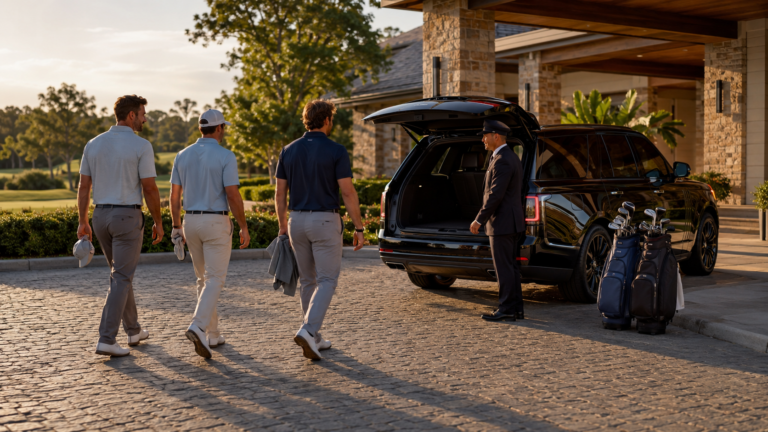
The simplest way to plan golf transportation is to start with the tee time, then work backward. The vehicle is important, but it should not be the first decision. First confirm where the players are being picked up, how many people are riding, whether clubs are traveling with them, how much time the course expects before the round, and where everyone is going afterward.
Vehicle choice depends on both the number of passengers and the equipment traveling with them. A sedan may suit one or two passengers with little or no golf gear, while an SUV, Sprinter or coordinated vehicles may be more practical when several players, golf bags, hard cases, or additional luggage are involved. Confirm the complete passenger and bag count before booking.
| Golf Plan | Better Transportation Structure |
| One player to one course | Sedan or SUV, point-to-point |
| Two players with clubs | SUV, subject to confirmed cargo capacity |
| Foursome with clubs | Large SUV, Sprinter, or coordinated vehicles; confirm capacity |
| Resort group outing | Sprinter or coordinated SUVs |
| Golf plus lunch or dinner | Round-trip or hourly |
| Golf day with changing timing | Hourly black car service |
| Corporate golf outing | Coordinated group transportation |
A regular local ride can often be planned around one pickup time and one destination. A golf ride has more moving parts. The tee time is fixed, but the transportation schedule should also include check-in, bag handling, warm-up time, cart assignment, and the walk from the drop-off point to the clubhouse or starter area. If the vehicle arrives only when the tee time begins, the group is already late.
Official City of San Diego golf information shows why planning time matters. The city lists Torrey Pines, Balboa Park, and Mission Bay among municipal golf options, and its official golf course information explains reservation and tee-time policies for those courses. At Torrey Pines, the official course policy says players must check in at least 30 minutes before their reservation, which is a strong reminder to build a real arrival buffer into the transportation plan.
Golf also changes the vehicle decision. Golf clubs can make a sedan impractical even when the passenger count is low. Two people may fit comfortably in a sedan, but two sets of clubs, shoes, extra layers, and small personal bags may call for an SUV. For a foursome, the question becomes whether everyone should ride together or whether coordinated vehicles are more comfortable.
Vehicle choice becomes easier once the golf schedule is clear. Before selecting a sedan, SUV, or Sprinter, the organizer should know the tee time, the required check-in time, the pickup point, the course entrance, and whether the group needs time for the driving range or putting green. The goal is to protect the tee time, not just arrive somewhere near the property.
A 9:20 a.m. tee time does not mean passengers should leave the hotel at 9:00. Work backward from the required course arrival time and include travel, unloading clubs, check-in, and warm-up. Larger resort properties can add extra time because the drop-off may be at a clubhouse, valet, or bag area.
It also helps to identify what the players are doing after the round. If the plan is simply course to hotel, a round trip may work. If the group may stay for lunch, visit a spa, meet a host for dinner, or return to different locations, the transportation structure changes. Golf transportation in San Diego should be built around the full day, not only the first ride.
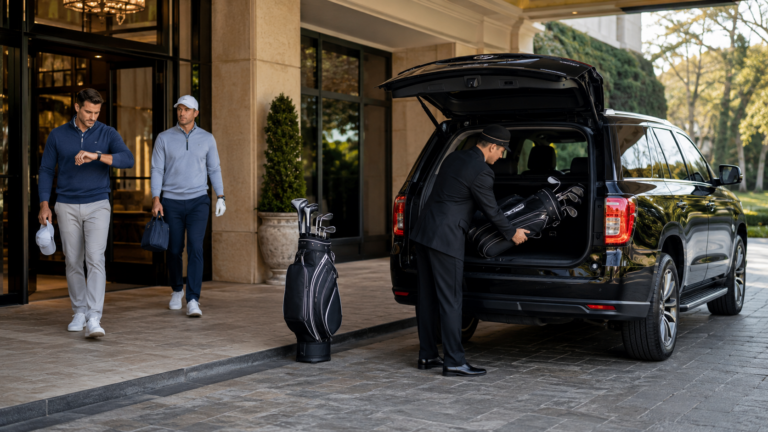
Hotel pickup can be simple when every player understands where to meet. It becomes messy when one person waits in the lobby, another stands at valet, and a third is still retrieving clubs from the room. Before booking, confirm whether the chauffeur should meet the group at the main entrance, valet area, side entrance, resort golf desk, or private residence driveway.
For resort golfers, the golf clubs may already be stored with the concierge, bell desk, golf shop, or a group host. The transportation provider should know whether the chauffeur is loading clubs at pickup or whether the players will collect them at the course. That one detail can change both the required vehicle and the departure timing.
A common planning problem is treating pickup time as the time people start gathering. For golf, the better structure is to set a passenger-ready time and a vehicle departure time. The group might be told to be downstairs at 7:20, with the vehicle departing at 7:30. That small distinction gives the chauffeur time to load clubs and lets the group leave on schedule.
Golfers staying at a resort should confirm where the group and clubs will be collected, especially when an early tee time is involved. Transportation for The Lodge at Torrey Pines can be planned around course access, golf-club handling, and the property’s designated pickup areas. Fairmont Grand Del Mar transportation may include travel to The Grand Golf Club as well as other activities at or beyond the resort. Providing the pickup location, tee time, number of players, and golf-bag count helps match the schedule and vehicle to the outing.
Choosing a vehicle for golfers is not the same as choosing one for a dinner reservation. Passenger count is only part of the decision. Golf clubs, bag shape, shoes, clothing, weather layers, small personal bags, and the desired comfort level all matter. A sedan may feel refined, but it may not be the practical fit when clubs travel with the players.
A single player without clubs in the vehicle can use a sedan comfortably. A solo player with clubs, two players with bags, or a small group headed to a resort course will usually be better served by an SUV. Larger groups may need a Sprinter-style vehicle or a coordinated vehicle plan. Before choosing the ride, compare the black car fleet against the number of players, golf bags, and comfort expectations for the day.
The most useful question is not “how many seats are available?” It is “how many people and golf bags can travel comfortably without forcing the vehicle to be packed too tightly?” A group may technically fit in one vehicle, but if the clubs, bags, and passengers make the ride uncomfortable, the better solution may be a larger vehicle or two coordinated rides.
For private golf transportation in San Diego, comfort and cargo fit should be part of the booking standard. Players should be able to arrive without feeling cramped or rushed and without uncertainty about club storage. Vehicle examples are planning categories, so confirm the exact class and capacity before booking.
Golf Situation | Likely Vehicle Fit | Why |
Solo player, no clubs traveling | Sedan | Simple, discreet, and appropriately scaled |
Solo player with clubs | SUV, subject to cargo fit | More practical cargo space |
Two players with clubs | SUV, subject to cargo fit | Comfort plus room for gear |
Foursome with clubs | Large SUV, Sprinter, or coordinated vehicles | Depends on clubs, bags, and comfort |
Resort golf group | Sprinter or coordinated vehicles | Depends on players and bag count |
Corporate golf outing | Sprinter or multiple SUVs | Easier group coordination |
Players with extra gear | SUV or Sprinter | Avoids tight packing |
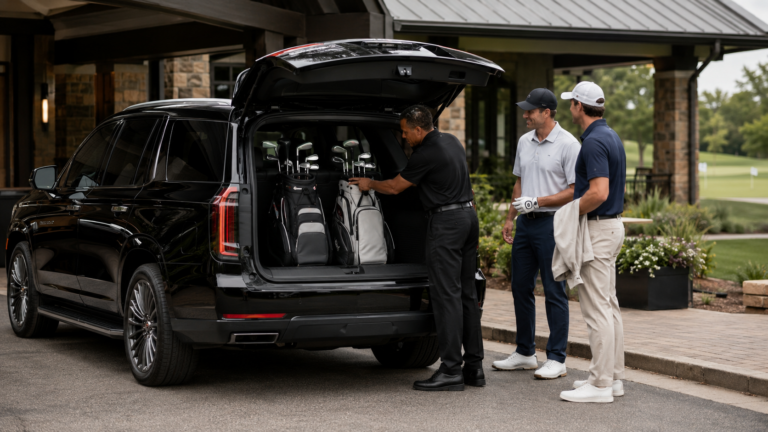
Golf gear creates practical transportation questions. The provider needs to know more than the number of passengers. The reservation should also include how many golf bags are traveling, whether the clubs are in soft bags or hard cases, whether players have extra shoes or outerwear, and whether any bags need to return to the hotel after the round.
Hard travel cases take more room than standard soft golf bags. A foursome with hard cases may require a different vehicle than a foursome whose clubs are already at the course. If players have shipped clubs to the resort or stored them with the golf shop, the vehicle may only need to move people. If clubs are coming from the hotel, residence, or airport-area hotel, cargo planning becomes part of the ride.
Golfers arriving on private aircraft may also need to coordinate pickup directly from an FBO before heading to the course, where meeting points, passenger contacts, and vehicle access are handled differently than at a commercial airport.
This is where transportation with golf clubs in San Diego becomes different from general luggage planning. The goal is not simply to fit objects into a trunk. The clubs should be handled carefully, loaded without rushing, and matched to a vehicle that gives players a smooth start to the day. A few clear details before booking can prevent a vehicle mismatch.
San Diego County offers a variety of public, resort, and private golf destinations, each with different arrival procedures, parking areas, and pickup locations. Planning transportation around the specific course can help golfers arrive with enough time for check-in, bag drop, and warm-up before their tee time.
Regardless of the course, confirming the pickup location, tee time, number of players, and golf bags before the reservation helps match the vehicle and schedule to the day.
Golf is often social, and the transportation should support that. A foursome may want to travel together so the day starts as a group. A resort host may want all guests picked up at one hotel entrance. A company treating clients to a golf outing may want the travel experience to feel organized from the first pickup. In each case, the vehicle and pickup plan should support the relationship between the players.
For a foursome, confirm whether one SUV can comfortably handle players and clubs or whether a Sprinter-style vehicle or coordinated vehicles are more practical. For larger groups, choose between one shared vehicle, several vehicles leaving together, or separate pickups based on where people are staying.
Group Type | Planning Need |
Foursome | Vehicle space for players and clubs |
Resort guests | Hotel pickup and course drop-off timing |
Corporate outing | Group schedule and central coordinator |
Visiting clients | Professional arrival and host communication |
Larger group | Sprinter or multiple vehicles |
Mixed pickup points | Separate vehicles may be cleaner |
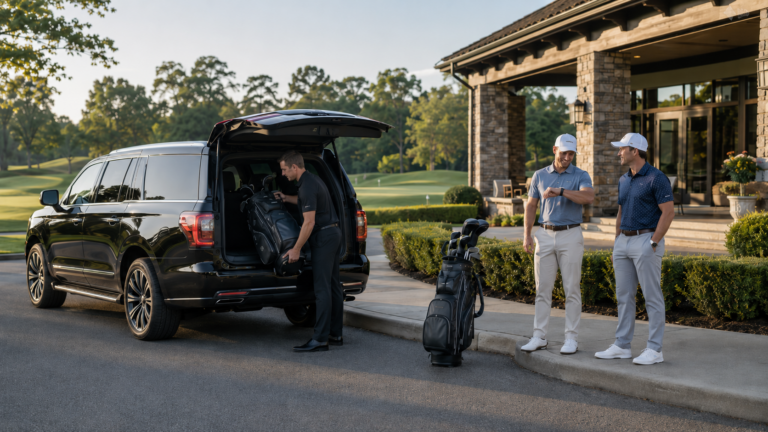
The ride structure should match the day’s flexibility. Point-to-point service works well when the plan is simple: hotel to course, residence to course, or course to hotel. Round-trip service can work when the pickup and return times are known in advance. Hourly service becomes more useful when the day includes multiple stops, uncertain timing, post-round lunch, dinner, spa plans, or a host who wants the vehicle to remain available.
For that type of flexible golf day, hourly black car service can be relevant, but only when the schedule needs that structure. A simple tee time does not automatically require hourly service. A full resort golf day with changing plans may.
The return after golf is the main reason to think carefully. Pace of play, post-round plans, client conversations, weather, and course delays can all affect timing. If the schedule is flexible, reserving transportation by the hour may be easier than guessing an exact return pickup. If the group knows when it will leave, a round trip may be simpler.
Golf Day Plan | Better Setup |
Hotel to course only | Point-to-point |
Hotel to course and back | Round-trip |
Course plus lunch | Round-trip or hourly |
Course, spa, dinner, and return | Hourly |
Group outing with changing timing | Hourly or coordinated plan |
Players ending in different locations | Coordinated vehicles |
The course arrival point matters. Some players want to be dropped near the clubhouse. Others prefer the bag drop, resort valet, pro shop, driving range, or a specific golf entrance. The chauffeur should not have to guess. When booking, provide the course name, preferred entrance, and whether the first stop is bag drop, check-in, or warm-up.
The official Torrey Pines course information is a good example of why arrival planning matters: players must check in at least 30 minutes before their reservation. Other courses may have different procedures, but the planning principle is the same. Build in time for the practical steps that happen before the first tee.
Players should also consider how long it takes to unload clubs. If the group is using a Sprinter or larger SUV, allow a few extra minutes to unload several golf bags. If the course has a preferred bag area, providing that detail ahead of time helps the vehicle stage correctly and keeps the group moving.
The return ride deserves as much attention as the course arrival. Some players return directly to a hotel or residence. Others stay for lunch, attend a resort appointment, meet a host, or continue to dinner. A group may also split after the round, with some players going back to the hotel and others going to a second stop.
If the return time is predictable, the booking can be structured as a round trip. If it may change, hourly service or a flexible coordinated plan can reduce stress. The group should decide who can authorize changes, who receives chauffeur communication, and whether everyone is returning together.
Golf transportation in San Diego should also account for the end-of-day condition of the group. Players may be tired, carrying gear, or finished at different times. A clear pickup location and return plan prevents confusion at the clubhouse, valet area, or resort entrance.
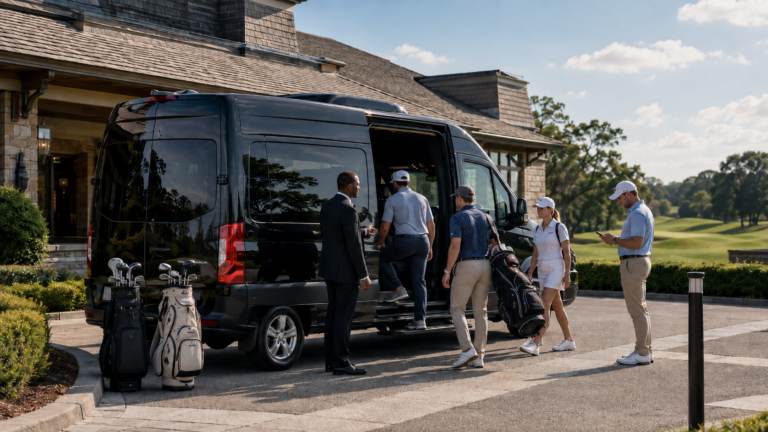
The best reservations are built from practical details. The transportation provider does not need a long story, but it does need enough information to match the vehicle and schedule to the day. A short message with the right information is better than a vague request for a luxury ride to a course.
Start with the tee time, pickup point, number of players, number of golf bags, and final destination after the round. Add whether the clubs are soft bags or hard cases, whether there are extra shoes or small bags, and whether the group wants the chauffeur to wait or return later. If a host, concierge, or assistant is arranging the ride, include both the booking contact and the passenger contact.
Detail | Why It Matters |
Tee time | Determines pickup and arrival buffer |
Course name and entrance | Prevents drop-off confusion |
Hotel or residence pickup point | Helps chauffeur stage correctly |
Number of players | Supports vehicle selection |
Number of golf bags | Prevents space issues |
Hard or soft club cases | Affects cargo planning |
Return plan | Determines point-to-point, round-trip, or hourly |
Post-round stops | Helps structure the day |
Coordinator contact | Useful for groups |
Preferred vehicle type | Helps match comfort and gear needs |
Most golf transportation problems happen before the vehicle arrives. The first is booking too small a vehicle because the passenger count looks simple. One or two players may fit in a sedan, but clubs can quickly change the vehicle requirement. If the golf bags are traveling with the players, say so clearly.
The second problem is using the tee time as the pickup time. The vehicle should support check-in, bag handling, and warm-up. A realistic plan works backward from the time the group needs to be ready at the course, not the moment the first player is scheduled to swing.
Another issue is unclear course arrival instructions. “Drop us at Torrey Pines” or “take us to La Costa” may not be enough if the group needs a specific clubhouse, bag drop, resort entrance, or golf shop. The chauffeur should be given the exact place where the players want to enter the property.
Finally, many groups forget the return. They book the morning transfer and decide later how to get back. That may work for casual plans, but it can create stress for a group with clubs, post-round commitments, or a host managing guests. A better plan confirms whether the return is fixed, flexible, or hourly before the first pickup.
A strong golf transportation plan can be built in five steps. First, start with the tee time and the course’s check-in expectation. Second, confirm the pickup location and the time players should be ready. Third, count players and golf bags separately. Fourth, choose the vehicle based on people, clubs, comfort, and whether the group should stay together. Fifth, decide whether the day needs point-to-point, round-trip, or hourly service before the reservation is confirmed.
The best vehicle depends on the number of players and whether clubs are traveling in the vehicle. A sedan can work for a simple solo or couple ride without much gear. An SUV may be more practical when clubs are included, subject to confirmed cargo capacity. A Sprinter or coordinated vehicles may fit better for foursomes, resort groups, or corporate golf outings.
Yes, although the appropriate vehicle depends on the number and type of golf bags, the passenger count, and any additional luggage. Hard travel cases require considerably more cargo space than standard golf bags. Provide these details before booking so the transportation provider can recommend a suitable vehicle.
Work backward from the required course arrival time. Include travel time, loading and unloading clubs, check-in, and any warm-up time the players want. Some courses require check-in before the tee time, so the transportation schedule should not be built around the tee time alone.
Round-trip service can work when the return is known. Hourly service may be better when the round, lunch, dinner, resort plans, or post-round timing may change. If the group wants a vehicle reserved around several stops or changing plans, hourly service may be easier to manage.
Yes. The organizer should provide the player count, number of golf bags, pickup location, course entrance, tee time, and return plan. Depending on confirmed vehicle capacity and the group’s needs, an SUV, Sprinter, or multiple coordinated vehicles may be the better fit.