
Comic-Con transportation in San Diego requires more planning than an ordinary ride to the Convention Center. During event week, downtown movement is shaped by shuttle routes, trolley traffic, street restrictions, pedestrian zones, off-site activations, long panel days, and late returns. A pickup point that works on a normal weekday may be inaccessible during the busiest hours of Comic-Con.
This guide is for badge holders, families, creators, hosted guests, assistants, brand teams, and groups that need a practical transportation plan. It explains when the official shuttle, trolley, or walking may be enough and when a prearranged private ride may make hotel pickup, group movement, or return transportation easier. Always treat current Comic-Con instructions as the final authority.
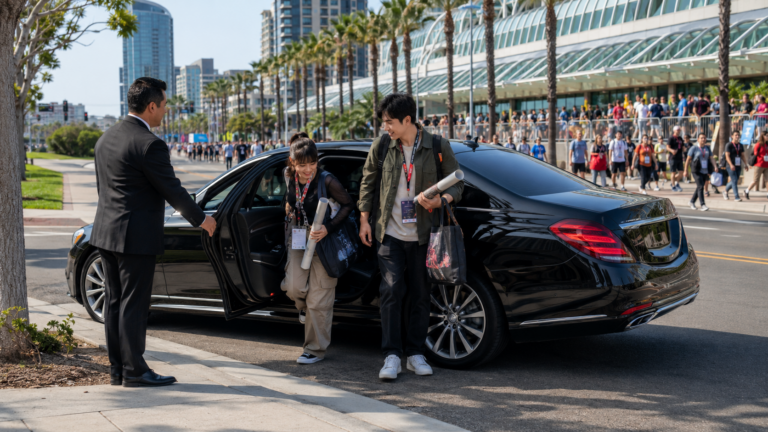
The best plan starts with where you are staying, when you need to arrive, how close your destination is to the Convention Center, and how you will return after the day ends. Official shuttles are useful for many badged attendees, especially those staying at shuttle hotels. The trolley can work well for riders near MTS routes. Walking may be the simplest option from some downtown hotels. Private transportation becomes more useful when the trip involves a family, VIP guest, creator schedule, group pickup, special mobility needs, gear, costumes, or a return that should be confirmed before the day begins.
Do not build the plan around a doorstep drop-off. During Comic-Con, the areas closest to the Convention Center are controlled differently than on a normal event day. A better plan uses a realistic hotel pickup point, an agreed nearby arrival area, and a return location that the passenger can find after panels, activations, or evening events.
| Situation | Best Starting Point | Planning Note |
| Badged attendee at shuttle hotel | Official shuttle | Check the current shuttle route and hours before the day starts. |
| Downtown hotel within walking distance | Walking plus backup return | Plan for heat, crowds, bags, costumes, and evening fatigue. |
| Family or small group | Private ride or shuttle | Use a clear hotel pickup point and return plan. |
| Creator, VIP, or hosted guest | Prearranged black car | Direct contact and timing confirmation matter. |
| Multiple activations or dinners | Hourly service | A flexible reservation can reduce repeated pickup planning. |
| Late return after events | Prearranged return | Confirm the meeting point before entering the event area. |
A standard convention plan usually means hotel to venue, venue to dinner, and back to the hotel. Comic-Con adds another layer. The Convention Center is surrounded by dense pedestrian traffic, off-site activations, hotel shuttle movement, trolley riders, fans, families, press, creators, and evening events. The result is not just more traffic; it is a different operating environment.
Official Comic-Con pages recommend public transportation and provide shuttle guidance because downtown streets can become difficult to navigate during the event. The same official resources also note that Harbor Drive restrictions affect vehicle access near the Convention Center. That means a private car plan should be built around realistic access, not ordinary curb assumptions.
The most useful question is not, “Can I get a ride to Comic-Con?” The better question is, “Where can the passenger actually meet the vehicle, how will they reach that point from the event area, and what happens if the schedule changes?” That is what separates a workable transportation plan from a last-minute scramble.
Hotel pickup is often the simplest part of Comic-Con transportation in San Diego, but only if the pickup point is specific. During major event hours, hotel entrances may be crowded with shuttle riders, rideshare requests, valet traffic, guests leaving at the same time, and pedestrians moving toward the Convention Center. A vague instruction such as “meet outside the hotel” can create delays before the ride even begins.
Start by confirming whether your hotel is served by the official shuttle. The official Comic-Con shuttle service has historically served downtown, Mission Valley, and airport-area hotel zones, but routes and hours should be checked on the current official shuttle page each year. If the shuttle serves your hotel and your timing is flexible, it may be the easiest way to start the day. If your timing is strict, your group is large, or a host is managing the ride for someone else, a private pickup may offer more control.
For private transportation, separate the vehicle arrival time from the passenger-ready time. If pickup is 8:00, the group should not begin gathering at 8:00. Decide whether the meeting point is the lobby, valet, side entrance, or a nearby curb the vehicle can actually reach. For groups, name one coordinator who confirms everyone is present before the vehicle moves.
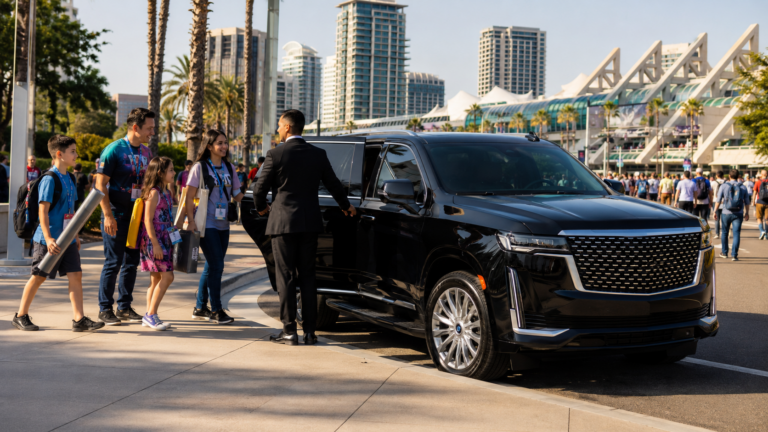
The Convention Center area should be treated as a pedestrian-heavy zone, not a normal curbside destination. Official Comic-Con resources point attendees to Harbor Drive restrictions and transportation guidance during the event. The practical takeaway for private rides is simple: do not assume a black car, rideshare, taxi, or private SUV can pull directly into the Convention Center driveway or stop exactly where the passenger wants.
A better instruction is based on an approved or realistic nearby area, then includes the walking path from that point. The passenger should know where the vehicle will stage, what landmark or hotel entrance to use, and who to contact if crowds or street controls change. The chauffeur should receive a pickup or drop-off location that can be reached without guessing through restricted traffic.
This is especially important for families, creators, guests with bags or costumes, and anyone on a timed schedule. A planned walking buffer may feel less convenient on paper, but it is often easier than trying to force a vehicle into a restricted or overcrowded area. Comic-Con pickup and drop-off planning should always respect current event rules and official guidance.
No single transportation method is best for every attendee. The right choice depends on hotel location, badge schedule, group size, comfort level, and return needs. Many attendees should use the official shuttle or trolley when those options match the day. A private ride is more useful when the plan requires coordination, privacy, space, or a confirmed return.
Not every attendee needs a black car, but understanding how this type of service works can make it easier to choose the right option. What Is a Black Car Service? explores the basics and the situations where it can be most useful.
Option | Best For | Watch For |
Official shuttle | Badged attendees staying near shuttle routes | Check current routes, service windows, and loading areas. |
Trolley | Attendees near Mission Valley, Old Town, or park-and-ride access | Expect crowds and walking from the station. |
Walking | Downtown hotel guests close to the event area | Plan for heat, bags, costumes, and long return walks. |
Rideshare or taxi | Flexible short trips outside restricted zones | Pickup confusion and demand can increase during peak hours. |
Private black car | Families, VIPs, hosted guests, or groups | Requires an agreed pickup point outside restricted areas. |
Hourly black car | Multi-stop days or changing schedules | Best when the vehicle should remain part of the day. |
Before finalizing the plan, confirm the current official Comic-Con shuttle routes and transportation access updates. Those official resources should guide shuttle timing, service windows, Harbor Drive access, and nearby transit options; the private ride plan should then fill the gaps that matter for the passenger, group, or return schedule.
Private transportation for Comic-Con in San Diego is not necessary for every attendee. It becomes more valuable when a guest must be collected on schedule, a group needs one shared plan, a family wants a calmer return, or a host needs clear confirmation that the trip has been completed.
A prearranged vehicle can also help with costumes, portfolios, cameras, shopping bags, media gear, or a stroller. For a family, hosted guest, creator, or small group, black car service in San Diego can keep the pickup point, vehicle fit, passenger count, and return plan organized before the day starts.
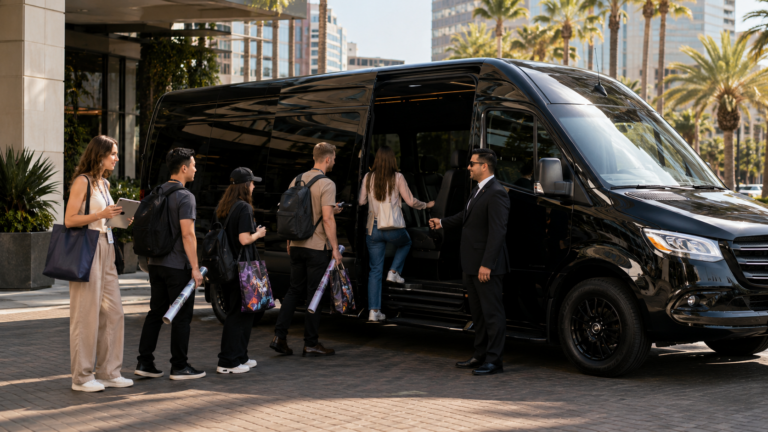
Comic-Con attendees have varied transportation needs. A family may need stroller space and an earlier return. A cosplayer may need extra vehicle clearance. A creator or studio guest may need transportation aligned with appearances, interviews, meals, and hosted events. A brand team may need several passengers to arrive together under one coordinator.
For studio teams, brand guests, VIP movement, or company-managed schedules, corporate transportation in San Diego fits when one organizer needs a coordinated passenger list, direct communication, and a clear plan across several riders. If one guest has a longer high-touch schedule with changing stops throughout the day, private chauffeur service may be the better fit.
Passenger Type | Transportation Need | Planning Priority |
Solo attendee | Simple route and return backup | Know shuttle, trolley, or walking path. |
Family | Calmer pickup and vehicle space | Plan bags, stroller, and return timing. |
Cosplayer | Careful entry and space for costume pieces | Avoid tight pickup points and small vehicles. |
Creator or guest | Schedule protection | Use direct contact and confirmed timing. |
Studio or brand guest | Host-managed movement | Assign one coordinator and vehicle plan. |
Group of friends | One meeting point | Decide return point before splitting up. |
Good pickup instructions are short, specific, and realistic. “Pick me up at Comic-Con” is not useful because the event covers more than one doorway and vehicle access can change by street, time, and security plan. A better instruction names the exact hotel, side street, approved loading area, or nearby landmark the passenger can reach on foot.
The passenger should also know how long the walk may take from their last panel, activation, or dinner. If the phone signal is slow, the battery is low, or the crowd is dense, the passenger should not be relying on a last-second message to find the vehicle. Confirming the pickup point before entering the event area is often the simplest way to avoid confusion later.
| Vague Instruction | Better Instruction |
| “Pick me up at Comic-Con.” | “Meet at the confirmed hotel or side-street pickup point.” |
| “Drop me at the Convention Center.” | “Drop near the agreed pedestrian access area.” |
| “Call when nearby.” | “Confirm pickup point and backup contact before departure.” |
| “We will figure it out after the panel.” | “Set a return area before entering the event.” |
| “Everyone will meet outside.” | “Use one named coordinator and one exact meeting point.” |
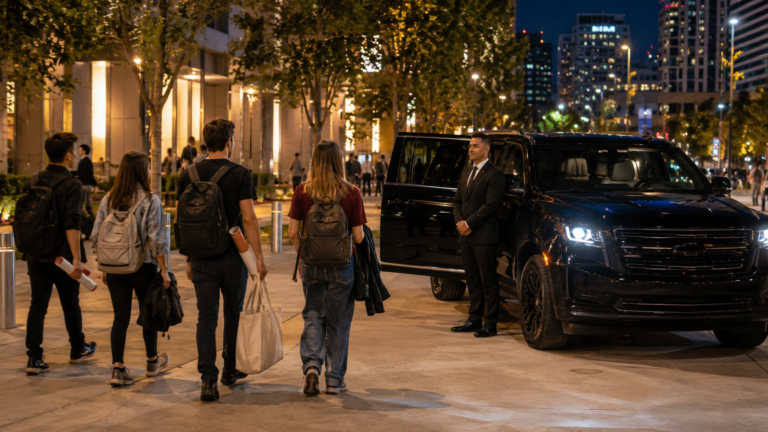
The return ride often creates the most uncertainty. Attendees are tired, phone batteries are low, crowds are moving, and the original drop-off point may no longer be practical. Panels can run long, off-site activations can change the evening, and shuttle service may be less convenient late at night.
Choose the return structure before the day begins. A family may use a round trip with a pickup window; a hosted guest may need a chauffeur staged nearby; a group may need one coordinator who confirms everyone has left. If the group will move through nearby Gaslamp streets, review the Gaslamp walking and district context before selecting a return point.
The service structure should match the day. Point-to-point service works when the ride is simple. Round-trip service works when the return time and place are known. Hourly black car service makes sense when the passenger has panels, activations, hosted dinners, and uncertain timing, because one vehicle can remain tied to the schedule instead of turning every stop into a new ride decision.
When the day includes more than one destination, planning each movement in advance can make the schedule much easier to manage. Multi-Stop Chauffeur Itinerary in San Diego takes a closer look at coordinating transportation for multi-stop itineraries.
Comic-Con Plan | Better Setup | Why |
Hotel to event only | Point-to-point | Simple ride with one destination. |
Hotel to event and back | Round trip | Return is known in advance. |
Family attending panels all day | Round trip with return plan | Reduces end-of-day uncertainty. |
VIP or creator schedule | Hourly or coordinated black car | Schedule may include several obligations. |
Multiple activations and dinners | Hourly service | Vehicle continuity may matter. |
Group returning late | Prearranged return ride | Everyone needs the same meeting point. |
The booking details should be practical, not excessive. The goal is to give the transportation provider enough information to select the right vehicle, set the right pickup point, and understand the timing. Do not simply send the event name. Comic-Con is too large and too crowded for that to be a complete transportation instruction.
Detail | Why It Matters |
Hotel or pickup address | Helps the chauffeur stage correctly. |
Preferred pickup point | Avoids crowded entrance confusion. |
Number of passengers | Supports vehicle selection. |
Costumes, props, bags, or stroller | Helps match vehicle space and entry needs. |
Panel, activation, or appearance timing | Helps build the departure buffer. |
Drop-off area | Prevents unrealistic Convention Center requests. |
Return time or window | Protects the end-of-day plan. |
Coordinator and backup contact | Useful if phones die or crowds separate people. |
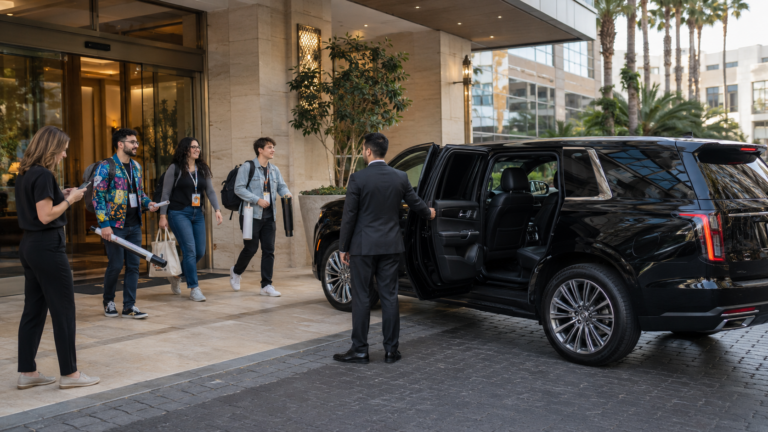
The first mistake is treating Comic-Con like a normal downtown appointment. During event week, the same hotel, street, and curb can operate very differently than usual. The second mistake is using a panel start time as the hotel departure time. Attendees still need time to leave the hotel, reach the event area, walk from drop-off, navigate crowds, and find the correct room or activation.
A third problem is waiting until the end of the night to choose a return point. That approach may work for a casual outing, but it is risky when thousands of attendees are moving at once. Other common problems include booking a vehicle too small for costumes or bags, giving instructions to the booking contact but not the passenger, forgetting that groups move slower than individuals, and assuming public shuttles will cover every late return.
The better approach is simple: plan one usable route into the event and one usable route out. Then decide whether shuttle, trolley, walking, rideshare, or private transportation fits each side of the day.
A strong plan begins with the hotel location and official transportation options. Check whether the hotel is on a shuttle route, whether the trolley is practical, and whether walking is realistic for the passenger. Then confirm where a private vehicle can actually stage if a black car is part of the plan.
Next, build the schedule backward. Add time for hotel gathering, walking, shuttle wait, security, crowds, and any gear or costume needs. Choose the vehicle and service structure after the schedule is clear. Finally, set the return point before the day begins. Comic-Con transportation in San Diego works best when the passenger knows both where they are going and where they will leave from when the event day is over.
The best option depends on hotel location, shuttle access, group size, schedule, and return timing. Shuttles and trolley service work well for many attendees. Private transportation becomes more useful when timing, privacy, group movement, family comfort, or a confirmed return matters.
Do not assume direct driveway access. Comic-Con transportation in San Diego is affected by Harbor Drive restrictions, crowd controls, and event-specific traffic plans. A private ride should use a realistic nearby pickup or drop-off point that the passenger can reach safely on foot.
Yes. Comic-Con provides official shuttle service for badged attendees, and the current routes, service windows, and hotel zones should be confirmed through the official shuttle information before the event. Shuttles are helpful, but they do not remove the need to plan hotel pickup, walking distance, group timing, or the return ride when a passenger needs more control.
They may benefit from it when they have costumes, bags, strollers, strict timing, or a late return. The value is not only the vehicle; it is the ability to agree on one pickup point, one passenger count, and one return plan before the day becomes crowded.
Round-trip service works when the return time and pickup point are known. Hourly service is better when the schedule may change, the passenger has multiple activations or dinners, or a host needs the vehicle to remain available outside the restricted event area.