
A convention transportation plan works best when nobody has to solve it from a hotel lobby. The right passengers know exactly where to meet, the departure time is based on when they must be inside the venue, the vehicle fits the group, and the return has already been considered. San Diego convention transportation is not just a vehicle choice; it is a clear sequence of movements built around the event agenda.
The same convention can create very different travel needs. A general attendee may only need a morning hotel transfer. A keynote speaker may have an early briefing, a media interview, and an off-site dinner. An exhibitor team may share one schedule, while hosted clients staying at another hotel need a separate vehicle and direct contact. Treating these passengers as one group usually creates waiting for some and unnecessary pressure for others.
This guide explains how to plan the full convention day: hotel departure, Convention Center arrival, passenger roles, group assignments, service structure, off-site commitments, and the final return. Once the schedule is clear, scheduled black car service in San Diego can be matched to the trip. The right vehicle depends on more than passenger capacity. Luggage, equipment, pickup access, and the day’s schedule also matter.
The plan should also work for the person managing the trip from elsewhere. Executive assistants, event planners, hosts, and travel coordinators need one version of the itinerary, one point of contact, and a clear rule for approving changes. Good coordination makes the passenger experience feel simple even when the schedule behind it is complex.
Start by counting the required movements, not the number of hours in the convention. A single hotel-to-venue ride is usually point-to-point. A known morning departure and evening return can be arranged as a round trip. A speaker or executive with sessions, meals, interviews, and an uncertain finish may need hourly service. A delegation leaving one hotel together may need a Sprinter, an SUV, or several coordinated vehicles.
The decision becomes easier when five details are known: required arrival time, exact pickup point, passengers traveling together, last scheduled commitment, and final destination. Those details reveal whether the day is fixed, flexible, or divided among several travelers.
| Convention situation | Best-fit transportation structure |
| One hotel-to-venue movement | Point-to-point transfer |
| Morning arrival and fixed hotel return | Round trip |
| Speaker with meetings and changing times | Hourly service |
| Group leaving one hotel on one schedule | SUV or Sprinter |
| Travelers at several hotels or call times | Coordinated vehicles |
| Convention plus off-site dinner | Round trip or hourly service |

The most useful planning time is not the published session time. It is the moment the passenger must be inside the correct hall, briefing room, exhibit area, or host meeting point. A session that begins at 9:00 may require an attendee to be at registration by 8:30. A speaker may need to arrive even earlier for a technical check. An exhibitor may follow access instructions that do not apply to general attendees.
Work backward from that required arrival. Include the time needed to assemble the group, move from the hotel lobby to the vehicle, account for traffic variation, unload, walk from the drop-off point, complete registration or screening, and locate the correct room. The drive may be short, but the complete arrival process is not. A plan based only on map time can still make the passenger late.
Then work forward from the final mandatory commitment. Some attendees can return to the hotel after the closing session. Others may have a client dinner, reception, private meeting, or team debrief. When those movements are identified early, the coordinator can decide whether a simple return reservation is enough or whether the vehicle should remain available.
Create one transportation timeline and label each commitment as fixed, flexible, or optional. Fixed commitments control the schedule. Flexible commitments need buffers. Optional stops should not make a speaker late or force an entire group to wait. This simple classification improves both service selection and passenger communication.
Hotel pickup is often where a carefully planned day begins to drift. Instructions such as “meet downstairs at 7:30” are too open to interpretation. One guest may wait in the lobby, another at valet, and a third near a separate tower entrance. Use one exact meeting point and make it easy to describe in a single sentence.
Confirm whether the property uses a main lobby, motor court, valet lane, curbside pickup area, side entrance, or separate tower pickup. The reservation should include the hotel, the entrance, the passenger or group name, a mobile contact, and a stable landmark that does not depend on temporary event signs.
Separate three times that are often confused: vehicle arrival, passenger-ready time, and departure. If the vehicle is due at 7:30, a larger group may need to assemble at 7:20 so the coordinator can confirm attendance and move everyone outside together. The passenger-ready time is the one that should appear in the group message.
Combine passengers only when their hotels, call times, and agendas genuinely match. Collecting attendees from several properties can create a chain of delays. A speaker who needs early access should not share a pickup with general attendees arriving later. For larger groups, designate one lead contact who knows the manifest and can confirm when boarding is complete.
A correct street address is not always the most useful arrival instruction. Conventions can use different halls, registration areas, meeting rooms, exhibitor access points, or hosted guest locations. The transportation plan should reference the event organizer’s instructions rather than assume that every convention uses the same entrance.
Review the event confirmation, registration email, speaker brief, and exhibitor materials. The San Diego Convention Center’s Getting Here & Around guide can support arrival planning, but the event organizer’s own instructions should still control the final pickup and drop-off plan.
Build time after drop-off. Passengers may still need to walk through the building, collect credentials, pass through screening, or find a room on another level. “Arrive at the building at 8:00” is not a complete instruction when the session also begins at 8:00. The schedule should target the passenger’s actual ready position inside the event.
Private transportation is not necessary for every attendee. Many Downtown hotels are close enough for walking, and the MTS Green Line schedule can help travelers check current trolley service. A scheduled vehicle becomes more valuable when the passenger has a fixed call time, a hosted role, a group to coordinate, mobility considerations, or off-site commitments that make a simple walk or transit trip less practical.
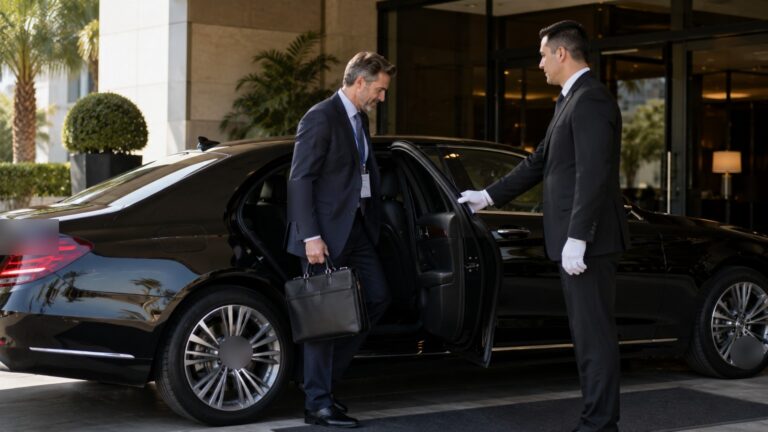
Passenger role changes the consequences of delay. A general attendee may have flexibility around a breakout session. A keynote speaker, VIP, or hosted client often does not. Transportation should therefore be assigned by schedule and responsibility, not merely by title or seniority.
Passenger role | Transportation priority |
General attendee | Clear hotel departure, venue arrival, and return plan |
Keynote speaker | Early call time and direct coordinator contact |
Executive or VIP | Privacy, punctuality, and confirmed itinerary |
Exhibitor team | Shared access time and coordinated hotel departure |
Hosted client | Clear communication between host, passenger, and chauffeur |
Group delegation | Manifest, vehicle assignment, and one lead contact |
General attendees usually need a simple morning movement and a known way back. Speakers and VIPs need earlier buffers, direct contact, and a coordinator who can authorize changes. Exhibitor teams may travel together, but passenger transportation should remain separate from freight, booth shipping, or material-handling logistics.
Hosted clients and executive groups require a plan that still works when the person making the reservation is not riding. Include the passenger’s number, exact pickup point, destination, host contact, and backup decision-maker. For recurring executive, team, or guest travel, corporate transportation in San Diego can keep pickup instructions, contact preferences, and recurring itinerary details consistent.
Many convention attendees also travel between client meetings, executive appointments, and business dinners. Professional Chauffeur for Business Travelers in San Diego explores how to plan those trips more efficiently.
The right service structure depends on how many movements are required and how certain their timing is. Point-to-point works well for one hotel-to-venue transfer. Round trip fits a known arrival and return. Hourly service becomes useful when the traveler has several locations, changing session times, hosted meals, or a departure that cannot be fixed in advance.
Service structure | Best convention use |
Point-to-point | One hotel-to-venue transfer |
Round trip | Known morning arrival and hotel return |
Hourly | Sessions, meetings, meals, and changing times |
Full-day managed plan | Speaker, executive, or hosted guest with an extended agenda |
Coordinated group plan | Several passengers or vehicles following one schedule |
With hourly black car service, the chauffeur and vehicle remain available during the reserved period. This can reduce repeated reservations when sessions run long or the passenger needs to move between the Convention Center, meetings, and dinner. Because minimums, pricing, and booking rules can change, confirm current details on the dedicated service page before booking.
Do not select the most extensive option by default. A fixed trip does not need hourly service simply because it is convention-related. At the same time, a dynamic day should not be forced into several rigid reservations when one managed plan would be easier to update. The question is not “Which service sounds most premium?” It is “How much uncertainty must the plan absorb?”

Group planning is a coordination decision before it is a capacity decision. Determine whether the passengers must leave together, arrive together, and follow the same agenda. A small leadership team may fit in one SUV, but separate vehicles can be more efficient when one executive has an earlier commitment. A larger delegation with one hotel and one schedule may benefit from a Sprinter because a single departure reduces moving parts.
Confirm the actual passenger count, accessibility needs, luggage or compact presentation materials, and group leader before selecting the vehicle.
When several vehicles are required, create assignments before pickup. Each traveler should know the ready time, hotel entrance, vehicle or group number, and lead contact. Drivers should receive matching information. Organize passengers by required arrival time rather than job title alone, and reconfirm assignments each evening during a multi-day convention because attendance, hotels, and side meetings can change.
The transportation plan is not complete when the passengers reach the Convention Center. End-of-day travel often becomes more fragmented because attendees divide among hotel returns, client dinners, receptions, and private meetings. Decide in advance which movements are fixed and which need flexibility.
Confirm the return pickup point before the morning departure. It may not be the same place used for drop-off. Give passengers one short instruction with a direct contact instead of sending several messages after the event has ended. For a dinner or reception, include the destination, reservation time, passenger list, expected return, and the person authorized to change the plan.
For evenings with multiple business meetings or client stops, business meeting transportation can be arranged around the full itinerary so your chauffeur can coordinate pickup times and travel between locations.
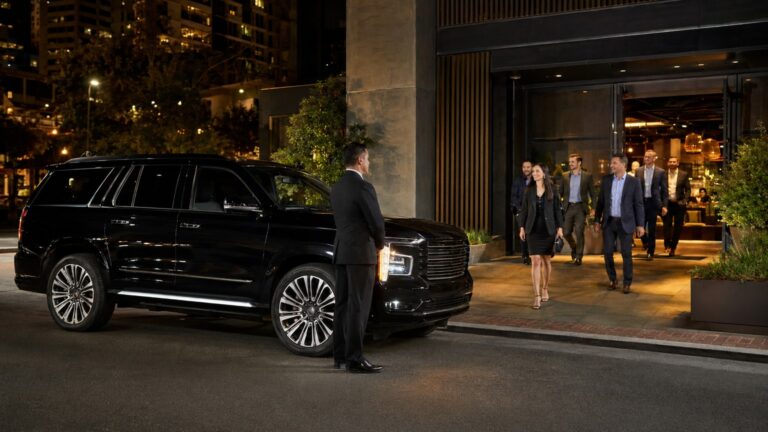
A useful transportation brief does not need to be complicated. It needs to be complete. Every reservation should identify the people, the timing, the locations, the passenger role, and the person responsible for decisions. Missing one of those elements creates more risk than using a short document.
Required detail | Why it matters |
Passenger names and mobile numbers | Supports direct communication and identity confirmation |
Hotel and exact entrance | Prevents lobby, valet, and tower confusion |
Required inside-venue arrival time | Creates the correct departure target |
Passenger role | Shows whether early access or tighter timing is required |
Group size and assignments | Supports vehicle planning and boarding control |
Event or host contact | Provides one escalation point |
Off-site commitments | Determines whether round-trip or hourly service fits |
Final destination | Prevents an incomplete end-of-day plan |
Use exact pickup and arrival language. A hotel name without an entrance can delay the morning. A venue name without an event-specific instruction can leave the passenger at the wrong part of a large facility. For hosted guests, include both the passenger and the host. For groups, use one lead contact instead of several people giving different instructions.
A transportation plan can be operationally correct and still fail if passengers receive it in fragments. The simplest approach is to send one concise trip message for each movement. It should state the passenger-ready time, exact meeting point, destination or venue instruction, vehicle or group assignment, lead contact, and what to do if the passenger cannot find the pickup. Avoid burying the essential details inside a long event email.
Use one source of truth for changes. If an executive assistant updates the return time, the event host and passenger should see the same revision. A change passed through several people can lose the entrance, passenger count, or final destination along the way. For larger groups, the lead contact should confirm changes for the group rather than asking every attendee to contact the chauffeur separately.
Communication should also match the passenger role. General attendees usually need a short ready-time and meeting-point message. Speakers and VIPs may need the chauffeur contact, host contact, call time, and backup instructions. Hosted guests should know who arranged the ride and who will meet them at the destination. The goal is not to share the entire coordinator file; it is to give each traveler exactly what they need to complete the movement confidently.
Most convention transportation problems come from unclear assumptions rather than unusual traffic. The first is using the session start as the hotel departure time. The second is naming the hotel without specifying the entrance. The third is combining passengers who attend the same event but have different required arrival times.
Another common breakdown is leaving the return plan until the afternoon, after the group has separated. The final destination and pickup structure should be considered with the morning ride. Finally, coordinators sometimes choose point-to-point, round trip, or hourly service before they understand the itinerary. The sequence should be reversed: clarify the schedule first, then select the service.
A strong plan also limits who can change it. The passenger, assistant, host, and event staff should not issue conflicting updates. Name the decision-maker and provide a backup. This preserves flexibility without allowing the itinerary to change in several directions at once.
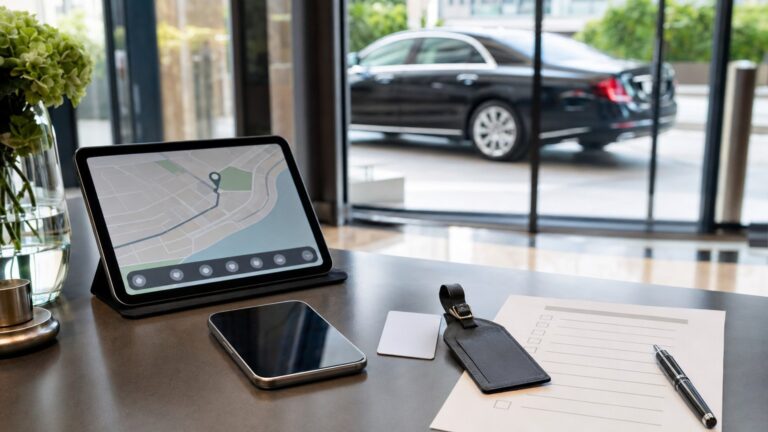
A reliable San Diego convention transportation plan can be summarized in five steps. First, start with the passenger’s required inside-venue arrival time. Second, group travelers by schedule and location rather than assuming everyone can share one departure. Third, confirm the exact hotel pickup, venue instruction, and final return point. Fourth, select point-to-point, round trip, hourly, or coordinated group service according to the number and certainty of the movements. Fifth, send every passenger one concise message containing the ready time, meeting point, vehicle assignment, arrival instruction, and return plan.
This framework works for a solo attendee, a keynote speaker, an exhibitor team, or a corporate delegation because it focuses on the information that changes the ride. The event name does not determine the transportation structure. The passenger schedule does.
The best option depends on the passenger schedule. One attendee may only need point-to-point service. A group leaving one hotel may need an SUV, Sprinter, or several coordinated vehicles. A speaker or executive with multiple commitments may benefit from hourly transportation.
Work backward from the time the attendee must be inside the correct hall or meeting room. Include group assembly, loading, traffic, unloading, walking, registration, security, and wayfinding. There is no single buffer that works for every event, hotel, passenger role, or time of day.
Round trip works when both the venue arrival and return time are known. Hourly service is useful when the passenger has several meetings, meals, off-site stops, or a departure time that may change. Point-to-point remains the efficient choice for one fixed movement.
Yes. Confirm the passenger’s contact, hotel pickup point, required arrival, event or host contact, venue instructions, off-site commitments, and final destination. Earlier buffers and one clear change authority are particularly important for hosted guests.
Smaller groups may use an SUV, while larger delegations may need a Sprinter or coordinated vehicles. The correct choice depends on passenger count, accessibility needs, shared schedule, pickup locations, and whether everyone must arrive together.